

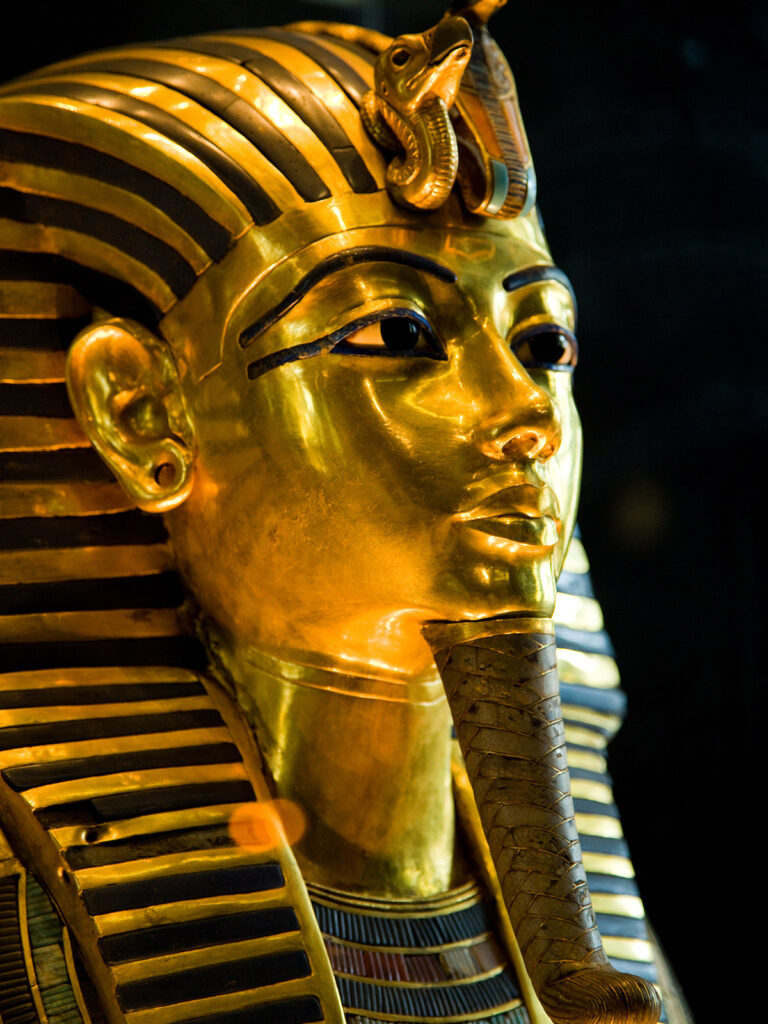
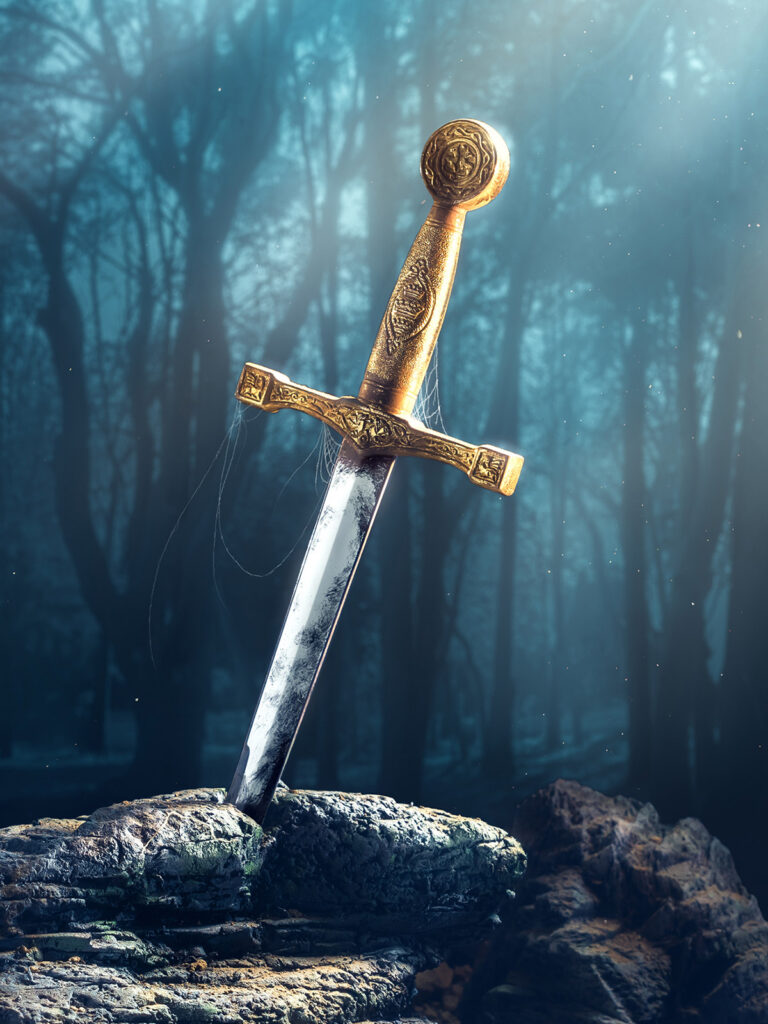
In 1924, the tomb of Tutankhamun in Egypt returned a precious 18th dynasty dagger with a gold scabbard and handle and an iron blade. Yet in the 14th century BC, our ancestors only had the technology to smelt copper, tin, lead, and gold!
How is this possible?
The mystery lies in where the metal comes from – not from a mine, but the sky. It is a “celestial rock” containing 10% nickel and 0.6% cobalt, percentages that are only found in meteorites and which give the metal exceptional resistance to oxidation. Other meteoric iron objects have come to light in Egypt, including some necklace beads dating back to 3300 BC, which have survived thanks to their very high nickel content. The situation is different for “terrestrial” iron, and ancient artefacts made of this metal “dissolve” in varying lengths of time depending on atmospheric conditions.
The oldest cast-iron artefacts that have come down to us seem to be some small spheres that came to light in the Chinese province of Henan, dating back to the sixth century BC and the Zhou dynasty.
But the history of cast iron had already begun five centuries earlier, at the end of the Bronze Age, when open deposits of copper and tin – the metals of which bronze is composed – became scarce.
They first turned to a mineral found in the marshes, limonite, and later, in Etruscan times, to hematite from the island of Elba.
Virgil himself, in his “Aeneid”, speaks of Elba – then known as Ilva – describing it as “inexhaustis Chalybum generosa metallis”, or “rich in the inexhaustible mines of the Càlibi”, the latter being a legendary tribe that Homer describes as the inventors of the iron and steel industry.
When heated to 1,100 degrees celsius, the metal did not liquefy but separated from the rock, forming a mass rich in impurities that were removed by long, vigorous hammering in the forge fire, where the carbon particles emitted by the wood crept between the iron molecules, considerably increasing its hardness.
We can therefore say that to enter the Iron Age, prehistoric man had to pass through cast iron, i.e. iron with a carbon content of between 2 and 6%.
In the Middle Ages, cast iron made its way into the war industry, and three centuries later, it became the essential metal for building factories, railway stations and bridges.
Today, cast iron is an important part of street furniture (benches, stairs, lampposts, manhole covers), it is widely used in homes (staircases, stoves and radiators), trains, ships and cars.
Not to mention that in the kitchen, for centuries, it has made our lives a little more comfortable, pleasant, healthy and tasty.


