

Risotto is one of my favourite dishes. I got to know the true flavour of risotto after meeting Gualtiero Marchesi’s cuisine and from that sensory experience my quest to discover true taste began.
In risotto, I also rediscover my origins: those of the Veneto region.
Here is an easy spring preparation. In the next newsletter “Ghisanativa in love”, you will read some practical tips to serve an unrivalled risotto to your guests.
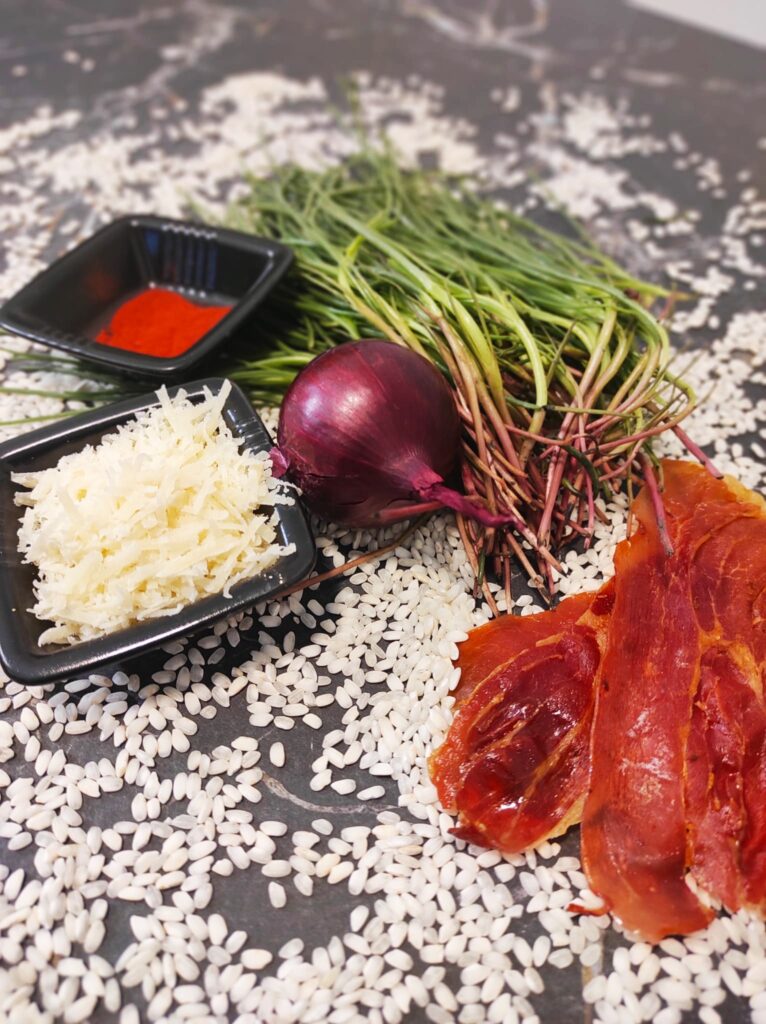
The first thing to do is to boil a pot of water.
I don’t use stock in this risotto because it already has many flavours and I don’t want to add any more. I prefer to keep the purity of the ingredients as much as possible. Therefore, I do not prepare vegetable stock.
The second thing to do is a visual analysis of the rice. Spread it out on a tray or large plate and check the grains, eliminating any spotted or broken ones.
Put the Ghisanativa pan on the heat and let it warm up, pour in the rice, without any fat, add a pinch of salt and keep stirring.
Toast the rice for a few minutes until it is very hot.
Now pour the first ladle of boiling water over the rice and wait until it has been completely absorbed before pouring in more.
It is very important to try to break down the cliché of constantly stirring the risotto and instead try to stir it as little as necessary.
The continuous stirring of the spoon, in fact, risks breaking the grains that, during cooking, will overcook and ruin the final balance of the dish.
Continue cooking the risotto, gradually pouring in ladles of boiling water when the previous liquids have been absorbed.
Halfway through the cooking time, add the saffron and five minutes before the end of the cooking time, add the agretti, season with salt and pepper and turn off the heat.
Ghisanativa will continue to cook the risotto naturally, with its ability to accumulate heat.
Once the cooking point has been reached, stir in very cold sour butter and the remaining Parmesan cheese and leave to rest for a couple of minutes before serving.
If you don’t have sour butter available, you can cream with very cold butter and add a teaspoon of vinegar to the risotto to give the necessary acidity that will help to degrease the mouth.
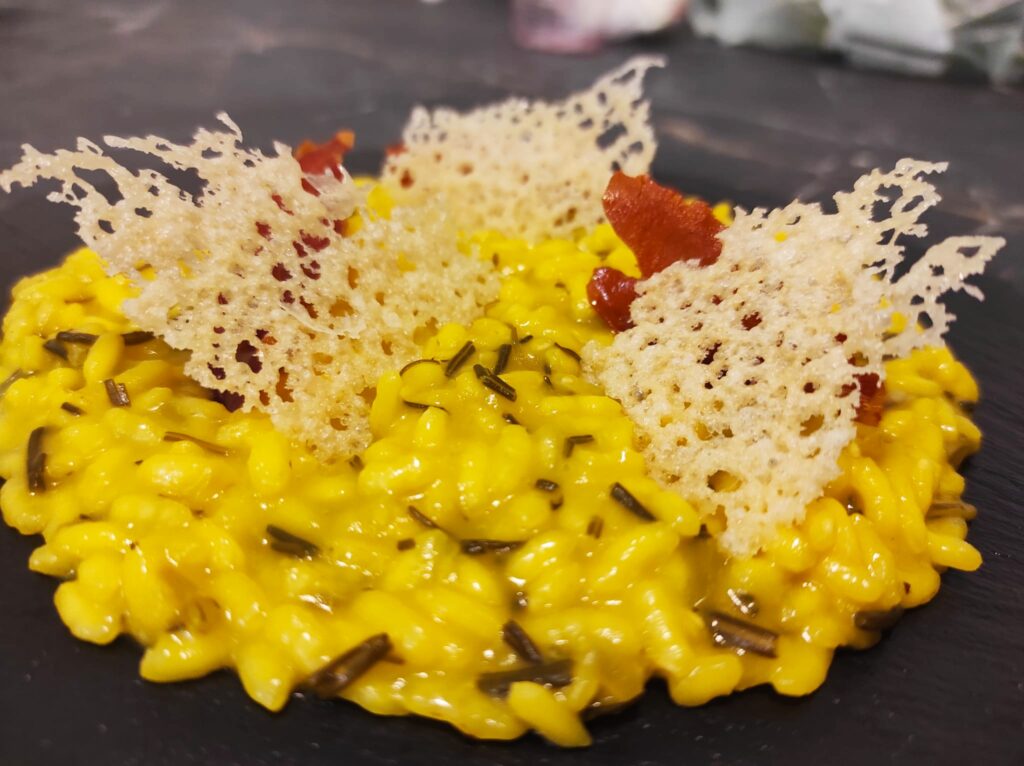
Serve the risotto and garnish with pieces of Parmigiano Reggiano chips and pieces of crunchy cured ham.
Procedure for preparing the agretti:
Clean the agretti and cook them for five minutes in salted water, then cool them immediately in water and ice to maintain their colour and texture. Once cooled, dry and chop them.
Procedure for preparing the saffron:
Soak the saffron pistils, or powder, in a little warm water to best extract the colour before pouring it into the risotto.
Procedure for the preparation of crunchy cured ham:
Heat Ghisanativa well and then distribute the slices of ham on the hotplate without oil or fat. You will make them crunchy turning them often and after a while, you can turn off the heat and continue the “cooking” because Ghisanativa retains the heat very well even after a long time.
Once the cured ham is nice and crispy, all you have to do is place it on absorbent paper to remove the excess fat and allow it to keep its crunchiness.
Procedure for preparing the Parmesan chips:
Spread 30g of grated Parmesan cheese well on a piece of baking paper and place in the microwave for 1 minute on high power.
Once the minute has passed, remove from the oven and place the chips on absorbent paper towels to remove excess fat and allow them to dry and become crispy.
Make 4 chips (one per diner).
Ghisanativa has a great capacity to accumulate heat, so pay attention during the toasting phase.
Toasting should be done dry. Stir the rice continuously to prevent it from burning and, above all, because it will get hot very quickly.
Compared to traditional pots you can keep the heat lower (or the power of the induction plate) because Ghisanativa while accumulating heat very well, allows you to maintain the necessary boiling of the risotto more easily.
Using Ghisanativa you will be able to turn off the heat many minutes before the rice is perfectly cooked because the pot remains very hot and the cooking will continue without the need of a heat source. Take this into account when creaming and resting the rice. Join the Ghisanativa community to read my tips.

“I graduated from the International Academy of Italian Cuisine (ALMA) of Gualtiero Marchesi in Colorno (PR) a few years ago.
In these more than twenty years of love for cooking, I have worked in many different realities: from pubs to starred kitchens, from chains to traditional restaurants, from catering to private events, giving value to every experience carried out with passion in the kitchen. I then became a cookery teacher for numerous Italian institutes, holding courses also for the Veneto Region, on cruise ships and in many clubs and private cookery schools.
A pioneer of Personal Chefs in Italy, I am known as CuocoPersonale (Personal Cooking Trainer) and owner of the “Chef del Benessere” (Wellbeing Chef) project.
Today I am a father, a Chef, a cooking trainer, a consultant and a writer “of taste.”


