

A mother and a daughter.
Demeter, Olympian goddess of the harvest, and Kore, also known as Kore, her only daughter.
Demeter is the divine feminine who presides over the generative dimension: birth, offspring, the continuation of biological life – plant and animal – are under her protection.
Demeter is a mother. Fundamentally mother. One of the forms of expression of Mother Nature, mother of all sentient beings. Demeter has eyes only for fruit, whether it be the fruit of the earth, of herds, or humans.
Dear to the eyes and heart of the goddess is her fruit: her daughter Kore, the maiden. She sees in her the full revelation of her own talent, her own mandate: the vocation to protect creatures by presiding over the care of their development, an indispensable condition for them to reach fulfillment. Demeter is the mother of all mothers. Kore is the perpetual daughter that every mother unconsciously desires; full of grace, filial dedication, innocence.

Kore grows up, but her mother does not want to see her fruit going towards fulfillment, full realisation. She dreams that Kore remains a maiden, her maiden. Forever. She dreams that the world will remain forever as it has been until then: all flowery, graceful, prolific, without jolts and twists. Under control. Her own. Her maternal vigilance ensures the continuation of all species.
However, there is a divine plan that goes beyond the mother’s dream, beyond the maiden’s naivety. And it must be fulfilled, so that everything can be truly accomplished, brought to fruition, and realized.
So one day Kore is in a meadow with her companions. She is gathering flowers. Perhaps crocuses, perhaps hyacinths, asphodels, or daffodils. She is picking flowers. She too is a flower, in her prime.
From the depths of the underworld Hades, Lord of the Underworld and the Kingdom of the Dead plucks the flower Kore. Leaping out of the earth on his black steeds and encircling the maiden in a captivating embrace, he takes her down below, to the depths, to non-innocence, to deep darkness, to the end of the flowering world. There where the flower, in the end, creased… can become a seed. To die in order to transform. To then be reborn as a flower – this time conscious – after having known death.
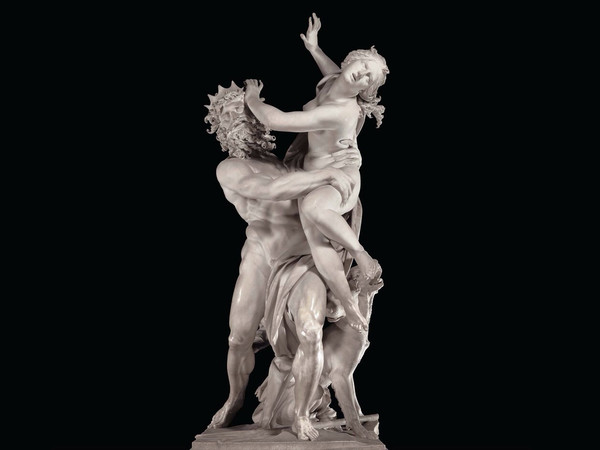
Hades abducts Kore so that the maiden goes beyond being a maiden. That is why he takes her with him to the Beyond. If there are only flowery meadows and superficial carefreeness, then the Darkness comes along. Which brings the gift of Awareness of what we are. Of all that we are: light and darkness. To give us the gift of Awareness of what we have. If we are too polarised in the light, not caring about our underworld, then it jumps up… out of nowhere… and kidnaps us. It grabs us to compensate for too much one-sided naivety. Hades is the Shadow that is in each one of us, women and men. Hades must take the maiden in us and bring her to fulfillment, to the inner marriage in which light and shadow know each other, dialogue, and interpenetrate.
So we can come to grasp the other mythical aspect of Hades, his being Pluto: god of the Abundant Wealth of the Underground. Yes, because seeds and seedlings, the indispensable providers of sustenance to the living, are only to be found beneath the surface of the earth; and minerals and precious gems are kept beneath the earth’s surface.
Once in the Underworld, Kore accepts a few grains of pomegranate, an autumn fruit, from Hades, which sanctions the union between the two.
The maiden changes her name: she becomes Persephone, Queen of the Underworld.
The divine mother, on earth, despairs. She has lost her creature-daughter-maiden. She has escaped her control. She has not been able – or could not – control the uncontrollable. Demeter does not even know where Kore is. She did not witness the kidnapping. She does not know that she has been kidnapped. She has seen nothing.
With the help of other gods, she learns what has happened. She feels lost, now that she has lost her fruit, her purest flower. Devastated, deprived of all energy, filled with burning pain, Demeter does not accept that Zeus, her all-powerful brother-spouse, father of Kore, has consented to the abduction. He granted Hades the power to take away the young maiden in her prime, to make her his wife.
The divine mother, filled with ardent suffering, dries up the earth which can no longer bear fruit… dries up the limbs of the beasts… withers the breasts of the nurses… makes every mortal creature sterile…
The world becomes bare, barren, and lifeless. In the image and likeness of the goddess who had made it flourishing and fertile.
The divine maternal feminine demands the restoration of the condition preceding the abduction: she wants her maiden back. Untouched. In bloom. Carefree while she picks the flowers. Otherwise, there will be no more life on the Planet.
Zeus must decide what to do: everything in his kingdom can’t be worn out, dull and dry forever; it is not possible – on the other hand – to bow to Demeter’s demands without incurring the rage of the mighty Hades.
All that remained was to choose the alternation of light and darkness. The alternation of a generative time and a quiescent time. The alternation of the seasonal rhythm. The alternation of the warm Spring and hot Summer to the cool Autumn and harsh Winter.
Zeus decides that in a precise part of the solar year, mother and daughter will be reunited on the earth’s surface.
Every Spring Kore returns from the underworld. To stay on earth for some time. Before descending again, when the pomegranate ripens, to the kingdom of her husband. In autumn the earth slowly becomes barren and then seems to lie – dead – wrapped in a cold winter mantle. It seems dead… but it is at rest. Hidden nourishment, that of the subsoil, of the Underworld, sustains it. Persephone watches over the earth’s rest and gives it the energy to prepare it for a new sowing and a new harvest.
Every spring Demeter awaits her creature. But when the maiden ascends to earth she is no longer Kore. She has become Persephone, bearing her own Conscious abundance. Demeter is also transformed. Now she knows that the flowering that Persephone brings is a Mystery. A mystery that is renewed, new every year. Because the flowering of the world is not a perpetually stable and unchanging condition. It is a wonder that cannot be taken for granted. Which has nothing ordinary about it.

In Spring Demeter and Persephone embrace. Each has given up something. Each has been enriched by something. Persephone tells her mother that death is not just dying. Demeter whispers to her daughter that she now knows how to go beyond the flower …
Welcome back Springtime!
Dr Debora Molli, psychotherapist

