

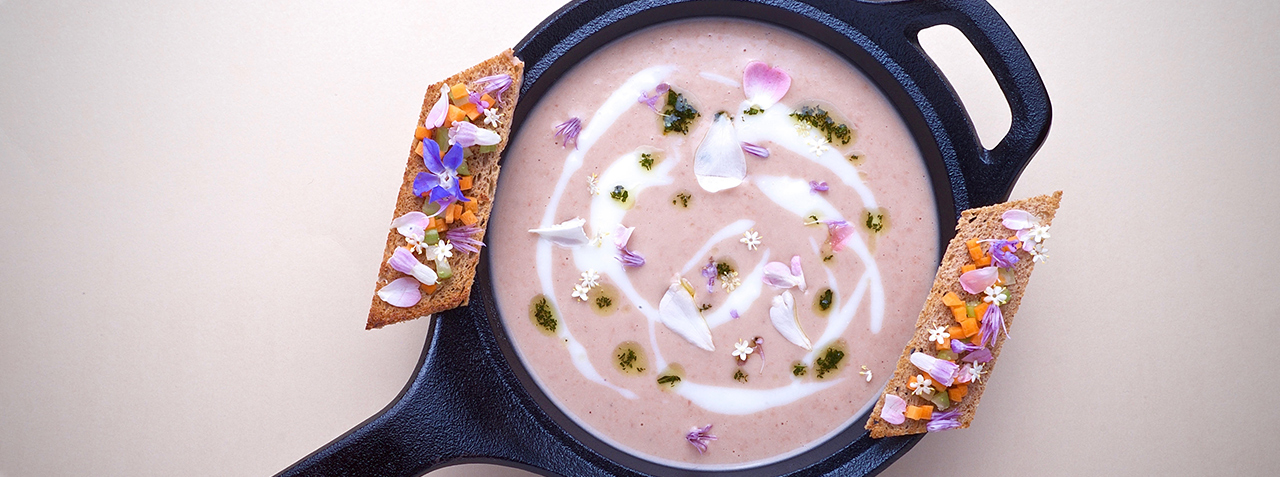
Today we chat with one of the leading chefs in natural, healthy, and vegetarian haute cuisine, chef Davide Larise. Teacher at the Italian Food Academy and Alma the International School of Italian Cuisine. Today he is a consultant for restaurants and companies.
Davide has worked at chef Pietro Leemann’s Joia restaurant in Milan. Davide trained at Gualtiero Marchesi’s Alma school and continued his career working in gourmet restaurants such as Il Piccolo Lago, La Taverna di Colloredo and Agli Amici.
He then returned to Alma as an assistant pastry chef and in 2014 he joined the 1 Michelin star restaurant Joia in Milan. After this experience, he took charge of the opening of a vegetarian bistro in Mantova and then of the Hotel Raphael in Rome.
He has a beautiful and modest smile. He is sensitive, intelligent, and skilled. More than an interview, this is more like a conversation between people who experience food in the same way, even if they approach it from different angles.
When did your passion for cooking start and when did you encounter vegetarian cuisine?
I have been keen on cooking since I was a child. My mother cooked a lot and my sister and I always helped her. I have always been extremely passionate about good wine and food that goes well with it. I love trying things and have always wanted a place of my own where I could let people taste good food and wine.
I didn’t become acquainted with professional cooking until I was 28. I went to mosaic school and then I worked in a mosaic-laying company, even though I knew I wouldn’t be doing that job all my life. One day, just when I least expected it, I heard about Gualtiero Marchesi’s Alma school. And, after a little hesitation related to the training investment, I decided to embark on a new professional adventure.
And the whole process was far from easy. I had to quickly catch up on everything that is normally studied as a student in hotel and catering schools, but my desire to learn helped me to shorten the time.
I became interested in vegetarianism after reading a book called “The Omnivore’s Dilemma”, which I recommend, and where the author discusses organic food and farming methods with common sense. He also talks about the environmental impact of intensive farming and animal husbandry.
My vegetarian choice is a happy one. I am not forcing anyone to change their diet to a plant-based one, but I don’t like people discussing my choice. Everyone is free to do as they please!
What does “wellness cooking” mean to you? What inspires you in the creation of your dishes?
I personally associate the term “natural” with seasonality.
I always try to buy local, pesticide-free products that are not grown in greenhouses. I often use whole grains in my cooking and I don’t really like refined foods, starting with sugar.
The basic concept is: “Improve your health by eating better and in a healthy way”. I often talk to experts and in my courses, I always try to explain “what happens in the pan” and ask everyone to listen to “what happens in their body” after tasting.
I base a lot on what my teacher G. Marchesi taught me, namely that the cook is not just a performer, but must be curious and always ask himself why certain reactions happen in the pan.
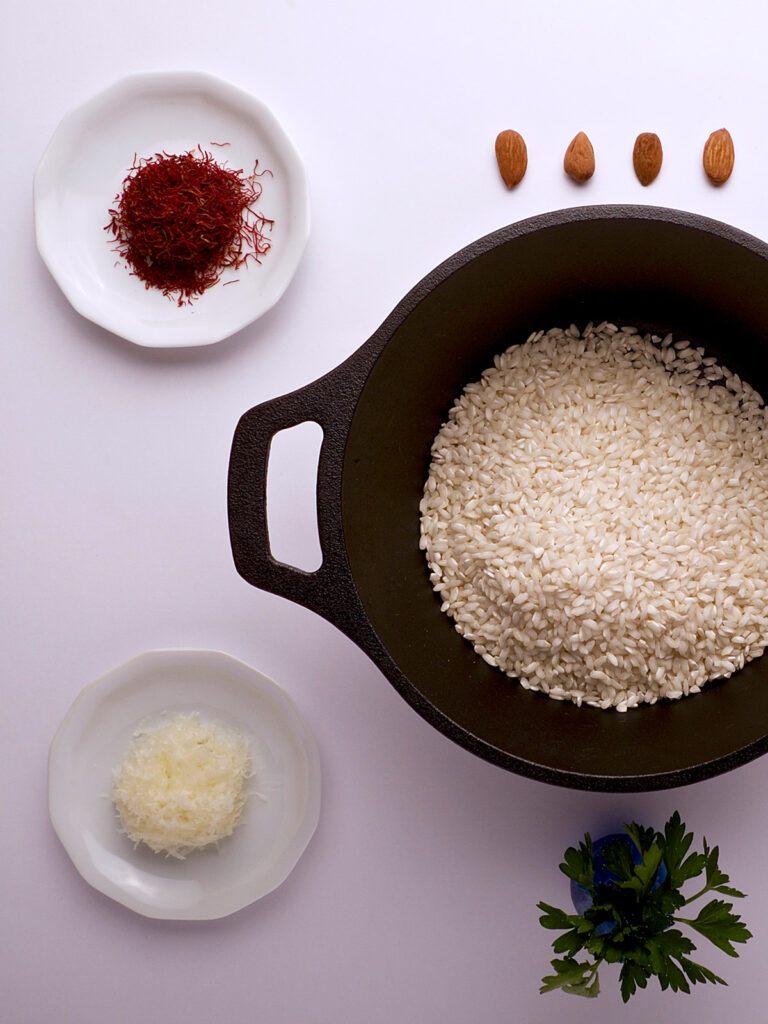
The essential things in the creation of my menu are:
Three things: your first vegetarian dish, your favourite dish, your favourite childhood dish
Among my favourite dishes, I love brown rice with lentils but – like half of Italians – I eat pizza, pasta and soups very willingly.
The first vegetarian dish I ever cooked was definitely pasta with tomato sauce, although I love pasta with garlic, oil and chilli pepper cooked in the right way.
As for my favourite childhood dish: well definitely Frico Friulano and hand mashed potatoes cooked slowly as my grandfather used to do.
Tell us about a particular lesson learned that you value and share every time you teach or work on a joint project?
At Alma, I certainly learned and embraced a very important lesson: respect the uniform you wear. Being clean, authentic, and cooking healthy food is essential. In my opinion, it is important to do your best to respect the customer.
A few months ago I started “Progetto Sinergie” where I invite friends to Friuli to cook together, creating unique events. A way of exchanging ideas with other people, receiving new stimuli, and spending quality time at work.
What advice or tips would you give to someone who wants to approach this type of cooking and why should they do so?
Anyone can approach cooking and you can start as a cook at any age. All you need is passion and dedication.
People approach vegetarian cuisine because it is healthy, beautiful, colourful, and inspiring. I want people to understand that eating without meat and fish can be a positive and sometimes unforgettable experience. I highly recommend giving it a try, without apprehension!
What three qualities do you apply in the kitchen?
When I eat, I am not particularly demanding. I adapt to situations and don’t criticise. If anything, I won’t go back to that restaurant!
However, in my kitchen I am extremely demanding but open to experimentation, I give space but I am demanding. And this is because I care about my own success and the success of the people who work with me.
Punctuality, order/discipline and creativity are the three characteristics that characterise me and that I try to convey to my dishes and to those who taste my cuisine.
What does working with tools like Ghisanativa mean to you?
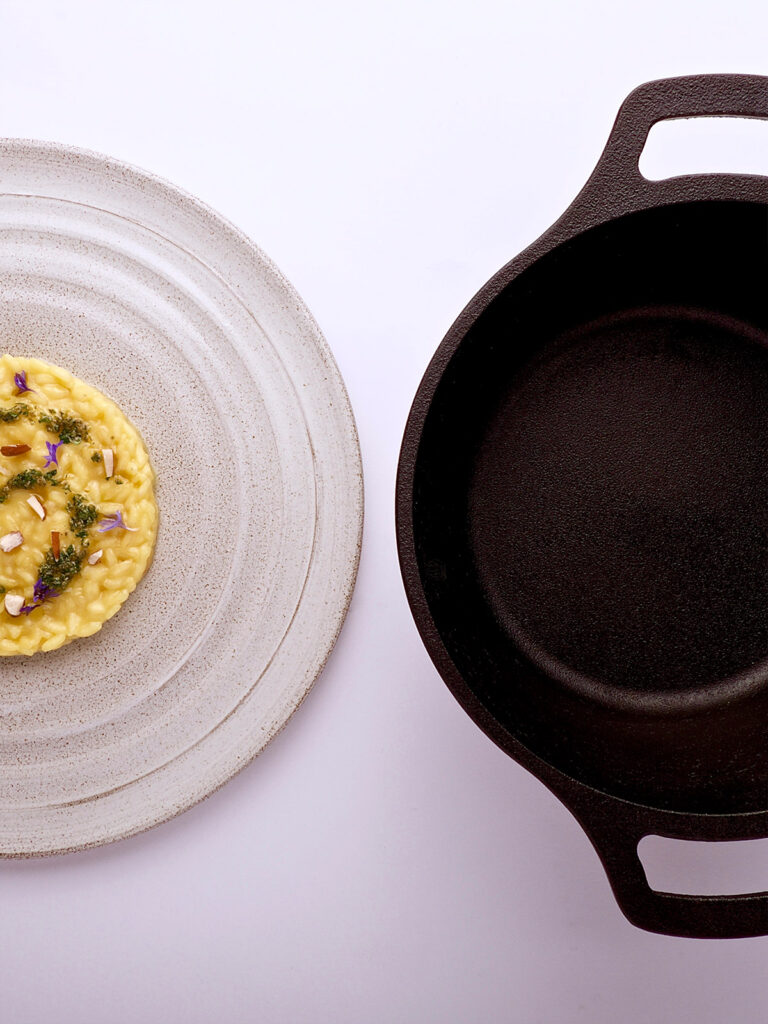
I recently got to know Ghisanativa. What I have experienced with certainty is the pleasure of using much less fat especially in long cooking sessions. In addition, cooking with Ghisanativa’s natural cast iron is less likely to cause the food to stick.
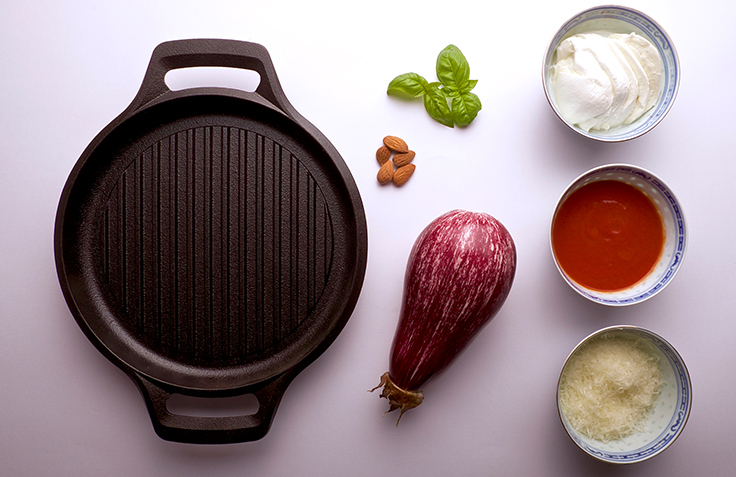
Roasting doesn’t need as much oil. After having brought the hotplate to a high temperature, I brush the vegetables with very little fat (and always before cooking) and then I put them on the stove. The beauty of Ghisanativa’s natural cast iron is not only the superior quality of the product which is without enamels, glazes and chemical coatings but above all the uniform heat transmission to the whole pan up to the handle. This allows you to create sublime dishes while shortening cooking times.

“Teacher at the Italian Food Academy and Alma the International School of Italian Cuisine. Today he is a consultant for restaurants and companies. Davide has worked at chef Pietro Leemann’s Joia restaurant in Milan.”

