

Hands up who has never dreamed of making a slice of fish at home that peels itself from the skin and bones? It is not difficult to do, but a lot depends on how the fish is cooked. The cooking of fish varies because each fish has a different weight. As you fail, you learn to tell when it is ready at a glance.
This is a single dose for two people.
Turn on the ventilated oven at 200 C with the Ghisanativa griddle inside.
Wash and peel (if you like) the potatoes. Cut them into slices of about half a centimetre. Put them in a bowl with oil, salt and pepper and aromatic herbs. Season them by turning them over with your hands.
As soon as the oven is hot, take Ghisanativa out of the oven and arrange the potato slices on top with 50 g of water spread all over the surface. Bake again in a ventilated oven at 180°C for about 25 minutes.
If you are not making fish with potatoes, start here.
Start by cleaning the fish if the fishmonger hasn’t already done it for you. The fish must be gutted, removing the entrails. Simply make a cut from the head to the belly in the lower part, a few centimetres long. Generally, the first fin under the head is taken as a starting point and goes all the way down to the middle of the white fish.
The scales must also be removed, as they are very annoying under the teeth. As well as being hard, they get stuck between the teeth and in the throat and do not go unnoticed. To remove them with a fish scaler, stroke the fish from tail to head on both sides. If you don’t have this valuable tool at home, that’s okay; you can use a knife on top where the blade doesn’t cut against the scales. If you’re wondering why the fish scaler is so valuable, well, here it is, it prevents the scales from ending up from your sink all over the house. With a trickle of water from the tap and a little care, you can still limit the damage.
Where there were entrails, put a pinch of salt and pepper, herbs, lemon or orange slices. Brush the fish with a thin layer of olive oil.
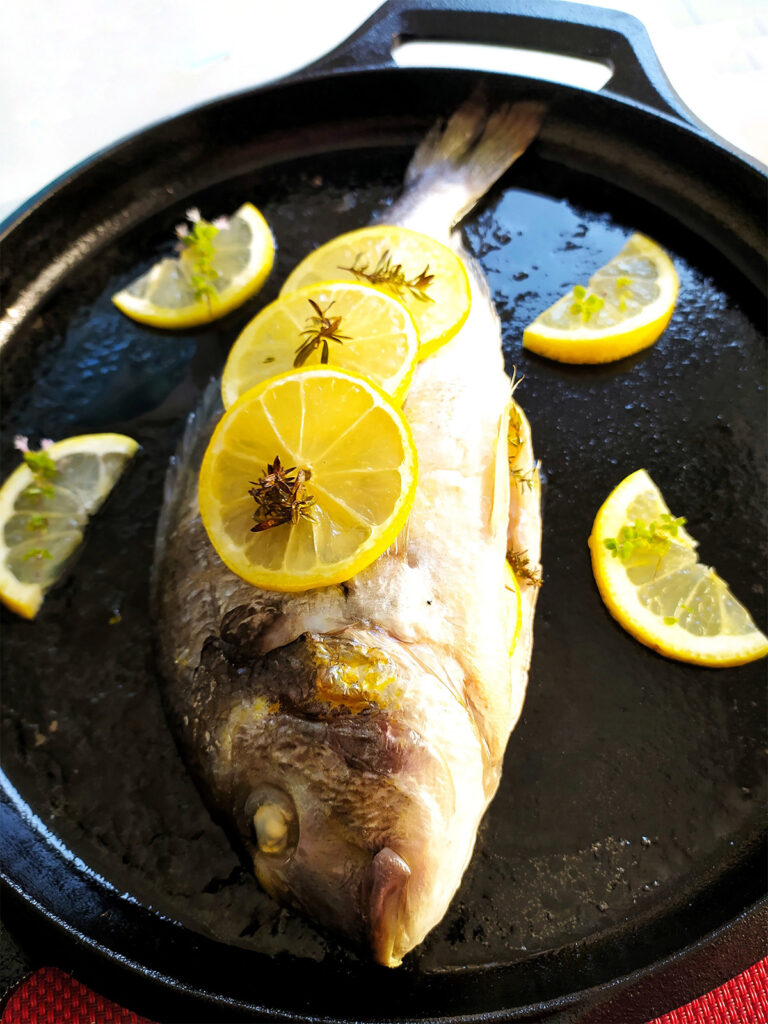
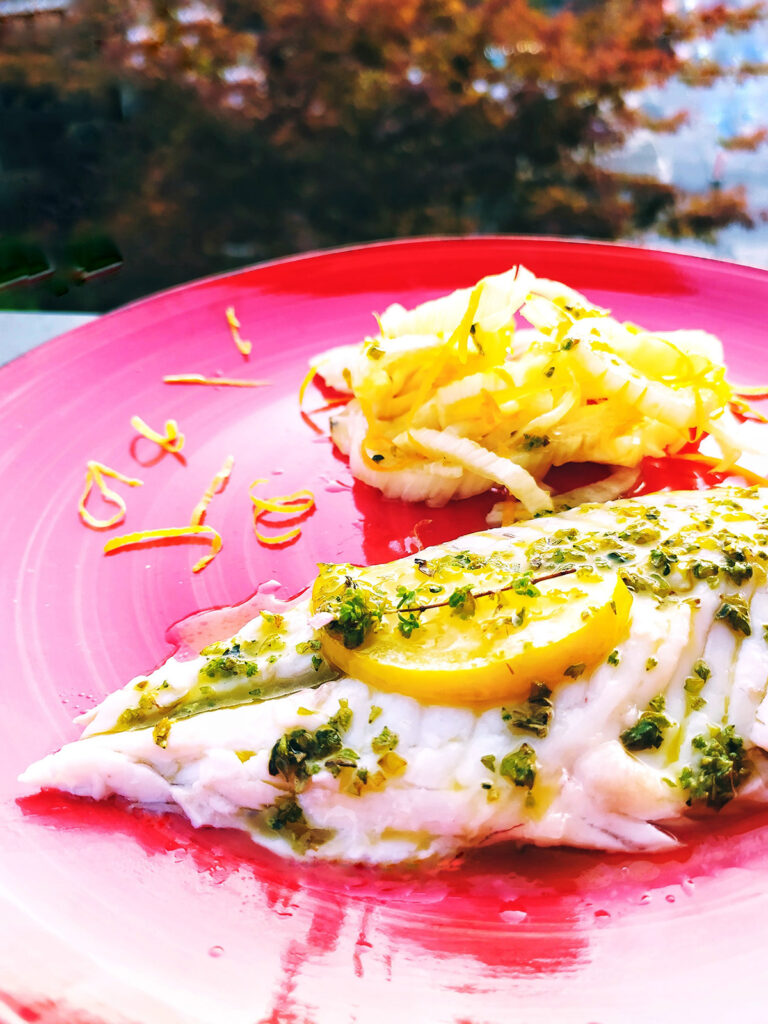
As soon as the potatoes are cooked, place the fish on top and put the whole thing back in the oven for 10-15 minutes. Or simply place the fish in the oven on a preheated Ghisanativa at 200°C for the same length of time. Halfway through cooking, spray the fish with a little white wine.
When the eye of the fish has turned white and the skin has shrivelled, try cutting into the backbone in the middle a few centimetres and check that the flesh is white and firm. At that point the fish is ready. If it is overcooked, the flesh will fall apart. If, on the other hand, it is undercooked it will remain pink and grey inside. You can always put it back in the oven for a few more minutes.
To serve, transfer it to a chopping board. Put the potatoes on the plates and warm the plates slightly for serving in the oven without waiting too long to prevent the fish from cooling.
First, go around the fish with a spoon and take the fins and bones outwards. Remove the skin. Then, to make fillets, follow the backbone in the middle. A spoon is enough to make the incision and a fork is enough to help lift the flesh out lengthways. Then pull the spine off, lifting it from the tail towards the head and repeat the operation on the underside.
Does the uncertainty of serving and cleaning the whole fish hold you back? Just cook the potatoes on Ghisanativa for 40 minutes and simply put the white fish fillets for the last 5 minutes in a ventilated oven at 180°C.
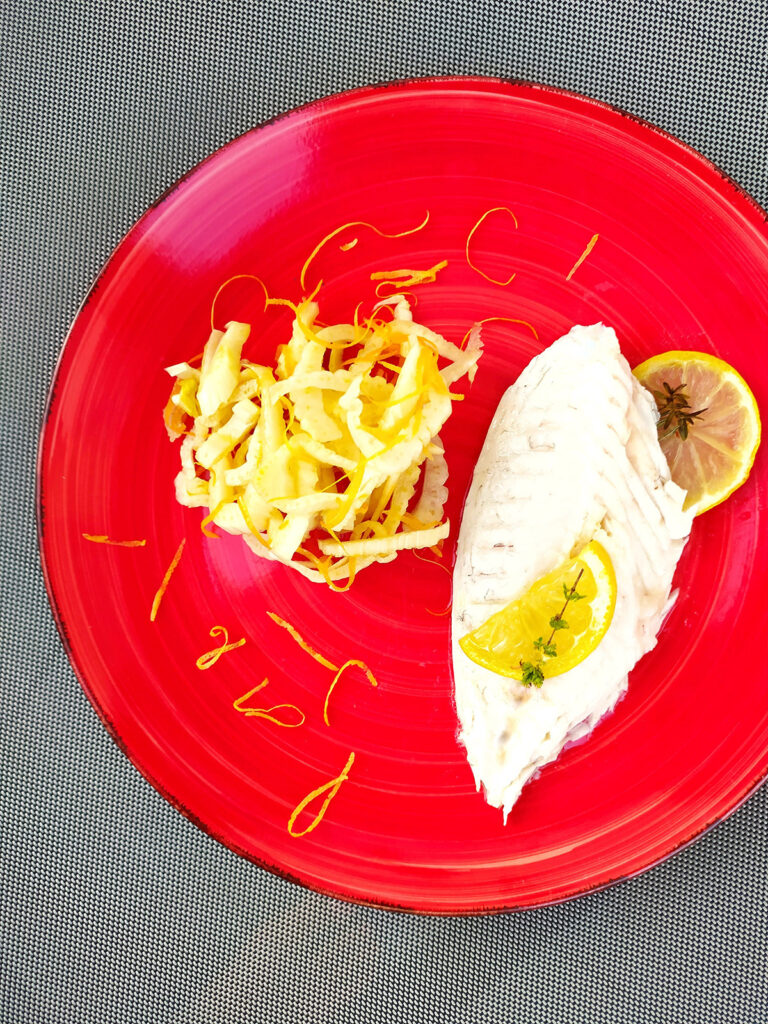
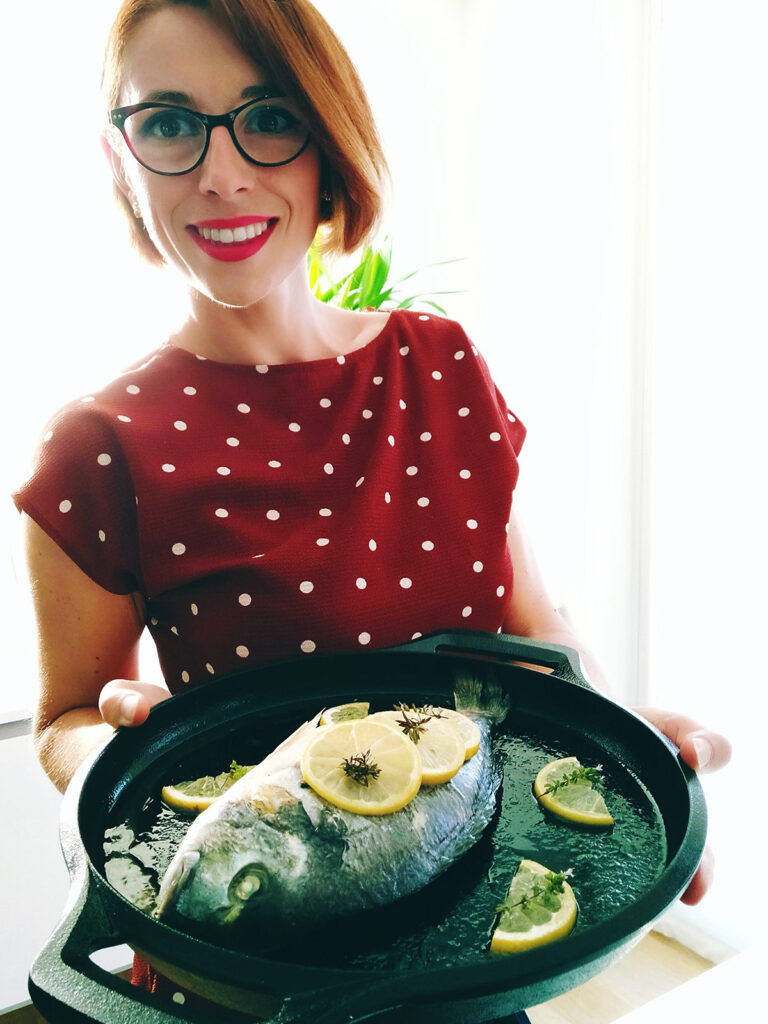
Don’t have an oven? You can cook everything also on the gas, using low flames and Ghisanativa’s Pyrex lid. For the sake of time, I recommend using ready-made fillets in this case.
In this recipe, the fish is served with raw fennel and orange zest. There is also a sauce: you mix citrus fruit juice and a pinch of oil with oregano with a whisk. Once emulsified in contact with air, you will see that it changes colour and becomes opaque. Pour it over boned fish just before eating.

“Bellunese doc, omnivorous and publicist journalist with a passion for food and wine. She graduated in Communication Sciences and then did a 10 kg master’s degree at Gambero Rosso, kilos she lost with a healthy diet and lots of walking in the mountains. The recipes she shares with us revisit traditional Italian cuisine and are repeatable even for those who are not PRO cooks.”


